How To Prevent Trailer Sway When Towing
Even if your loaded trailer is within the towing capacity of your vehicle, an unbalanced load can make for a dangerous towing combination. Too much weight at the rear of the trailer can cause trailer sway, while too much weight at the front can overload the towbar, compress the rear suspension, lift the front wheels, and compromise steering and braking. The safest towing setup ensures your trailer weight is evenly distributed over the trailer axles and that you follow all manufacturer recommendations for weight distribution between the towing vehicle and trailer.
Load Smarter, Drive Safer
The way you load your trailer will directly affect how it handles on the road.
- Heavy items should always be placed centrally and over the axle to maintain balance.
- Avoid stacking heavy items high or loading too much weight toward the front or rear, as this can destabilise your entire towing combination.
- Secure every item properly using straps or lashings rated for at least twice the load weight, and cover loose materials like soil or gravel with a tarp or net to prevent them spilling onto the road.
- Aim for a tongue load equal to about 10% of the trailer’s total weight (without exceeding the towbar’s rating).
- Never overload a single axle — doing so can reduce steering, braking, and traction, especially on the front wheels of your tow vehicle.
Once loaded, your driving habits must also adapt:
- Towing increases stopping distances, so keep at least four seconds between you and the vehicle ahead.
- Accelerate and brake smoothly, plan your turns earlier, and use lower gears on long descents to prevent brake fade.
- On longer trips, fatigue sets in faster when towing, so schedule more regular rest stops.
- Reversing with a trailer takes practice — spend time in a quiet car park learning how to manoeuvre before heading onto busy roads or into campsites.
Tip: Distribute your load evenly over the trailer axles, measure your ball load, secure your load, slow down, and take more frequent breaks.
Weight Distribution & Trailer Sway
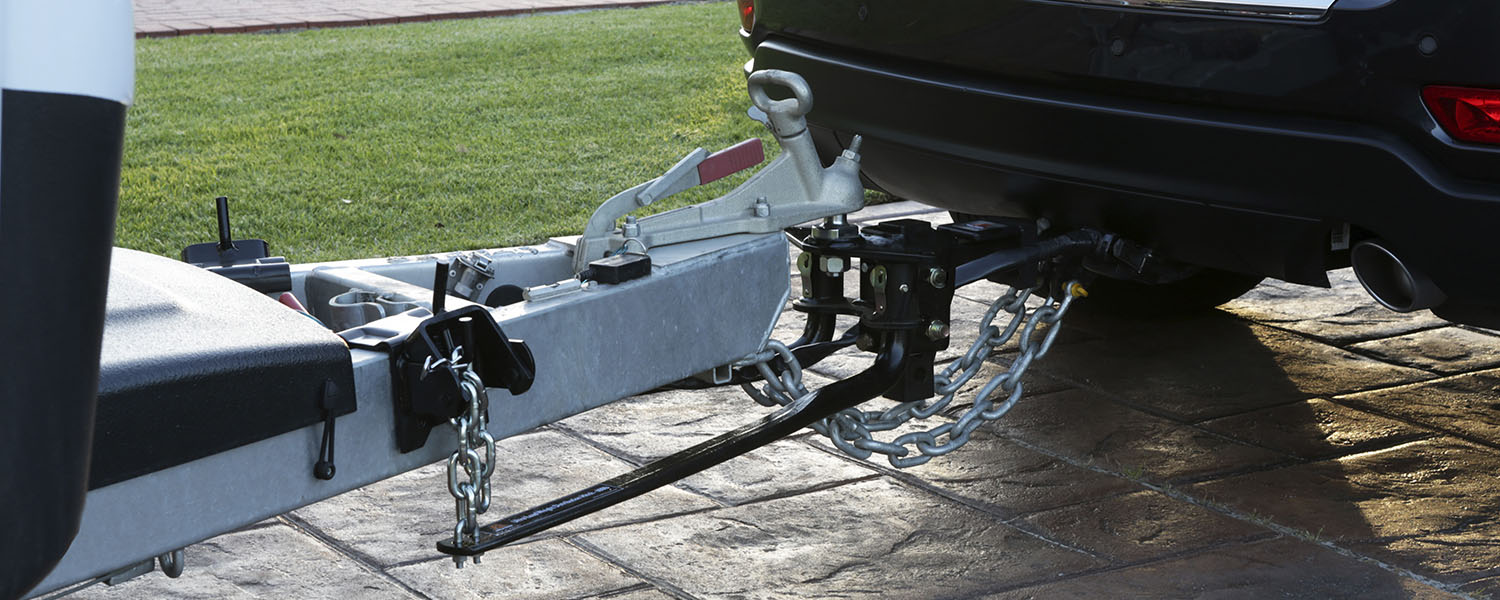
If it’s not possible to evenly distribute the load, a weight distribution system (also called a load leveller) can be an effective alternative. By transferring some of the tongue weight across the axles of both the vehicle and trailer, it can improve handling, braking, and fuel efficiency. This is particularly important for front-wheel-drive vehicles, which can lose traction when too much weight is added to the rear.
Trailer sway is one of the most unnerving and dangerous towing issues. It’s often caused by improperly loaded trailers and made worse by crosswinds, overtaking trucks, or uneven road surfaces. To reduce sway, lower your driving speed and apply the accelerator and brakes smoothly when accelerating, cornering, or stopping. Be mindful of how passing traffic, wind, and uneven roads affect your towing stability—each can change how your vehicle and trailer respond.
Many modern systems help control sway. Like Electronic Stability Control (ESC) in vehicles, trailer ESC systems apply braking selectively to correct sway once it begins. Hayman Reese friction and dual cam sway controllers integrate with weight distribution systems to help prevent trailer sway before it occurs.
Use of an effective weight distribution system (load leveller) will provide a safer more comfortable towing experience by:
- Improving steering feel and control
- Reducing vehicle sway
- Transferring weight to front wheels for improved traction (Front wheel drive vehicles)
- Avoiding overloading of rear tyres
- Improving braking in normal and emergency
braking situations
- Fits in 1 minute (following original installation)
A correctly adjusted weight distribution system should return the vehicle close to its original posture with the trailer attached. (as pictured right). This is done by transfer of downforce created on the towball, back to the front wheels improving control and braking.
We have a weight distribution system available for use with selected approved towbars available through Hayman Reese installers. Contact us for further detail.
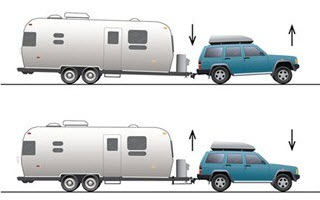
Poor weight distribution (with load leveller)
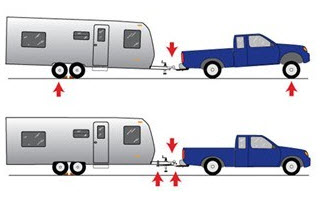
Even weight distribution (with load leveller)
Other Considerations
- Loads must not project beyond the towing vehicle’s width; 2.5 m is the maximum legal towing width in New Zealand.
- Rear overhangs over 1 m must display a 400 × 300 mm flag in daylight or a red light at night.
Tip: If your trailer still sways after correct loading, seek specialist advice before your next trip.